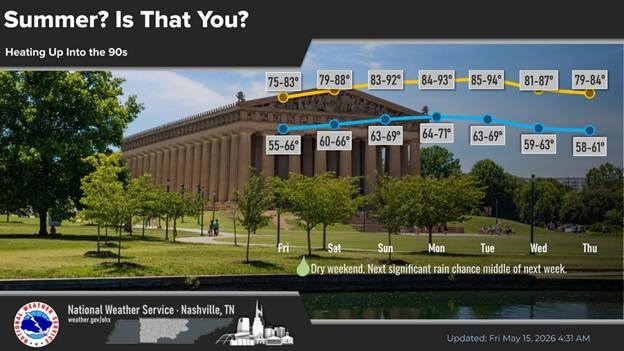
Nashville’s first 90 degree days are forecast for this weekend and into early next week.
The good news for outdoor activities is it will be dry going into early next week. The next significant rain chance will come by the middle part of the next week, according to the Nashville Office of the National Weather Service. (NWS).
High temperatures are expected to climb from the low 80s on Friday and to the lower to possibly mid 90s by Tuesday.
It is important to remember safety in the heat and while doing various activities.
Heat Safety
Heat Safety for People
- Stay hydrated—drink water consistently, even if you don’t feel thirsty.
- Take frequent breaks in the shade or indoors, especially during peak heat hours (10 a.m.–4 p.m.).
- Wear lightweight, light colored clothing to help your body stay cool.
- Never push through heat exhaustion signs such as dizziness, headache, nausea, or confusion—seek shade and cool down immediately.
- Use sunscreen and reapply often to prevent burns that can increase heat stress.
- Check on neighbors, older adults, and anyone without air conditioning during extreme heat.
Heat Safety for Kids
- Never leave a child in a parked car—temperatures rise to deadly levels within minutes.
- Keep kids indoors during the hottest parts of the day; encourage shaded or water based play when outside.
- Make sure children drink plenty of water; offer fluids frequently during outdoor activities.
- Teach them to recognize early symptoms of overheating and to alert an adult.
- Always test playground surfaces—slides, swings, and turf can reach burn temperatures in summer sun.
Heat Safety for Pets
- Never leave pets in vehicles, even for a short time.
- Provide constant access to fresh water and shade when outside.
- Limit exercise to early morning or late evening when temperatures are cooler.
- Avoid hot pavement—if it’s too hot for your hand, it’s too hot for their paws.
- Watch for signs of heat stress such as excessive panting, drooling, lethargy, or vomiting.
- Make sure outdoor pets have adequate ventilation and a cool place to rest.
Water Safety
OEM Lake Safety Video
General Water Safety
- Always wear a life jacket when near or on the water—no exceptions.
- Never swim or boat alone. Use the buddy system.
- Avoid alcohol while swimming, fishing, or operating a boat.
- Check weather conditions before heading out, and leave the water immediately if storms approach.
- Know the water temperature—cold water can quickly lead to hypothermia.
- Be aware of underwater hazards such as rocks, debris, sudden drop-offs, or strong currents.
- Keep a charged phone nearby in case of emergencies.
Swimming Safety
- Swim only in designated areas supervised by lifeguards when possible.
- Enter the water feet-first to avoid head or neck injuries.
- Stay within your swimming ability and never push past personal limits.
- Watch for signs of fatigue or cramps and get out of the water immediately if they occur.
- Keep children within arm’s reach at all times; flotation devices are not a substitute for supervision.
Fishing Safety
- Wear a life jacket when fishing from a boat, dock, or riverbank with deep water.
- Use caution when casting—ensure the area behind you is clear.
- Keep tackle and hooks away from children and pets.
- Watch your footing on wet or rocky surfaces to avoid slips and falls.
- Maintain awareness of rising water levels or fast moving currents, especially near dams or after rainfall.
Boating Safety
- Every passenger must have a properly fitting USCG approved life jacket.
- Perform a safety check before launching (fuel, lights, horn/whistle, flotation devices, fire extinguisher).
- Follow navigation rules and maintain a safe speed, especially in crowded areas.
- Stay clear of swimming zones and shoreline anglers.
- Never overload your boat—follow manufacturer weight limits.
- Use a designated operator who remains sober and focused at all times.
- Keep an eye out for other vessels, paddleboarders, and kayakers.
Other Outdoor Activities
- Stay alert for construction zones, lane shifts, and reduced speed limits—summer is peak roadwork season.
- Maintain a safe following distance to allow extra reaction time in heavy traffic.
- Watch for disabled vehicles on shoulders; move over and slow down as required by law.
- Keep your vehicle cool and hydrated—check coolant levels, tire pressure, and engine temperature before long trips.
- Avoid distractions: put phones down and use hands free navigation.
- Keep an emergency kit with water, jumper cables, and roadside tools.
Neighborhood Safety
- Drive slowly and cautiously—children are out of school and often playing outside.
- Watch for pedestrians, cyclists, and pets that may enter the roadway unexpectedly.
- Avoid blocking sidewalks, fire hydrants, or intersections when parking.
- Pay close attention near parks, pools, and neighborhood bus stops.
- Be mindful of heat: never leave children or pets in a parked car, even for a moment.
- Use extra caution at dusk when visibility drops but outdoor activity remains high.
Motorist Safety
- Hydrate and rest before driving; heat can cause fatigue and slow reaction times.
- Ensure air conditioning is functioning and check that all fluids are topped off.
- Keep sunglasses handy to reduce glare and improve visibility.
- Plan travel routes ahead of time and check for delays or closures.
- If your vehicle overheats, pull over safely, turn off the engine, and allow it to cool—never open a hot radiator.
- Share the road with motorcycles, bicycles, and pedestrians; summer increases all types of roadway traffic.