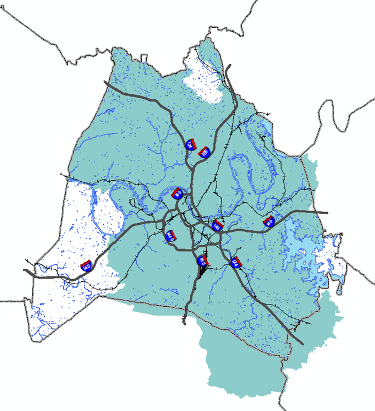
We reclaim used water at our three water reclamation facilities: Central, Dry Creek, and Whites Creek. These facilities provide service to Davidson County and portions of Sumner, Robertson, Wilson, Rutherford, and Williamson counties. [See map of service area] We treat an average of 186 million gallons of water a day and can treat up to 500 million gallons of water a day during heavy rain. We maintain more than 3,000 miles of sewer pipes, the largest being 16 feet wide.
Take an in-depth look at the water reclamation process
Metro Water Services goes above and beyond. We use the latest technology, including ultra violet light to disinfect water before it returns to the river.
You can help prevent toilet clogs. Learn what not to flush!
Discover Water Reclamation at the Whites Creek Water Reclamation Facility and see how we return clean reclaimed water to the environment! Register for Reclamation Facility tour online.
For Teachers
- Here are some wastewater treatment plant vocabulary words to learn.
- Here’s a fun poster explanation of how we clean water. (Look for this poster in bathrooms at various Metro locations.)
- These pictures explain in more detail how we clean water and return it to the Cumberland River.
- Water Bill Math
- Water Pollution: What would you do? Reading, writing, and math
- Request an activity or more information on a water topic
Meet one of our employees
Follow us on Social Media
Follow @NashvilleMWS on Facebook, Twitter, and Instagram and look for #WhereDoesItGo.
Report a Concern
To report a sewer emergency, contact our 24-hour Emergency Dispatch at 615-862-4600 or [email protected].
Service Area
Davidson County and portions of Sumner, Robertson, Wilson Rutherford, and Williamson counties.
Sewer Rehabilitation
Metro Water Services sewer rehabilitation program, Clean Water Nashville, was established in 2011 and builds upon decades of work in addressing our sewer capacity across the county. The program includes:
- updating infrastructure to reduce sewer overflows
- reducing health risks associated with exposure to bacteria and contaminants
- improving water quality in the Cumberland River and Davidson County’s extensive network of streams, creeks and tributaries
For more information about the program and upcoming projects, visit the Clean Water Nashville website.