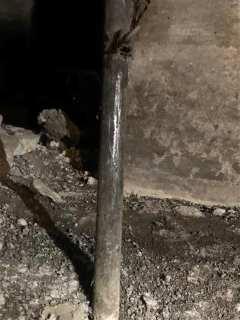
A water service line connects your home to the utility main. Prior to the mid 50's, these service lines were often made of lead as it was the preferred piping material for service lines in the early 1900s. However, the MWS standard for service lines in 1970 was copper. The Standard Building Code was changed in an addendum revision in 1977 to remove lead pipe in above ground supply plumbing installations - this ordinance was adopted by Metro Council July 6, 1979 (Bill No 79-1349). In 1986, Congress enacted the “lead ban,” which stated that not only public water systems, but also anyone else who intends to install or repair drinking water plumbing connected to a public water system, must use “lead free materials.” In 2011, the Federal Reduction of Lead in Drinking Water Act, which redefines “lead free materials”, was signed into law and became effective in January 2014.
While lead is no longer used, some older service lines still remain.
For many years, Metro Water Services has been replacing their portion of lead service lines when found during construction or repair activities. EPA's Lead and Copper Rule Improvements (LCRI) require the replacement of lead service lines and Galvanized lines Requiring Replacement (GRR) under the control of the water system by 2037.
As shown in the diagram below, the service line connects the private plumbing to the public water main (typically under the street). Metro Water Services owns the service line from the water main to the meter. The property owner is responsible for the service line from the meter to the residence or building.
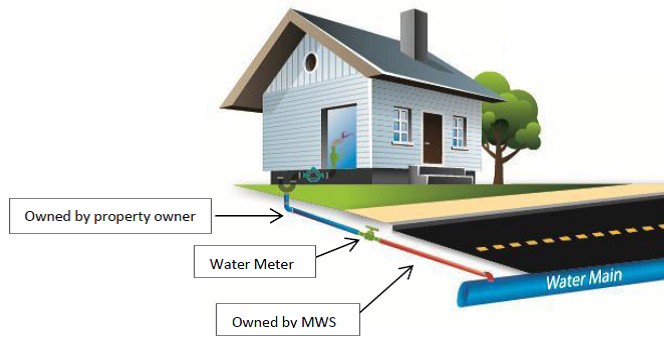
Lead service lines on a customer’s property are not part of the public water system and are the responsibility of the property owner. Metro Water Services strongly advises that you contact a licensed plumber for any work on your service line.
You can identify lead pipe easily by carefully scratching the pipe with a key. If the pipe is made of lead, the area you've scratched will turn a bright silver color. Do not use a knife or other sharp instrument and take care not to cut or puncture a hole in the pipe. (Note: Galvanized piping can also be dull gray in color. A strong magnet will typically cling to galvanized pipes but will not cling to lead pipes.) Lead service lines can be connected to the residential plumbing using solder and have a characteristic solder "bulb" at the end, a compression fitting, or other connector made of galvanized iron or brass/bronze, similar to this: