Nashville is no stranger to severe weather. Between intense thunderstorms and flash floods, our city has repeatedly faced the challenges that come with living in an urban watershed. One of the most defining moments in our recent history was the May 2010 flood. This event reshaped how we, as a city, think about water, safety, and community. Images from that flood still remind us how quickly natural disasters can change a community forever.
Such historic events highlight why stormwater management is essential for everyone who calls Nashville home.
It’s Stormwater Awareness Week and we’re diving into the history, challenges, and successes that have shaped Nashville’s stormwater system. Discover why stormwater management impacts all of us and learn simple steps you can take to contribute to a safer, cleaner community.
Stormwater is the rain or melted snow that flows across our roofs, streets, yards, and driveways, all the while picking up pollutants along the journey. Unlike wastewater, which travels through pipes to treatment plants, stormwater flows directly into creeks, streams, and rivers. Without careful management, it can contribute to flooding, erosion, and water pollution.
Nashville’s approach to stormwater has been evolving for more than two centuries, beginning with the city’s earliest brick and clay sewers in 1823. These original systems were built as combined sewers meaning they carry both stormwater and sanitary waste, a common practice in the 19th century. This system allowed all water to flow straight into the Cumberland River and nearby streams.
By the mid 20th century, Nashville began transitioning away from combined systems. Sanitary and storm sewers were gradually separated, and wastewater treatment plants were built to improve river and stream health. Still, heavy rains would continue to trigger combined sewer overflows in older parts of the city, emphasizing the need for stronger stormwater planning and infrastructure.
Major regulatory and engineering milestones shaped modern stormwater management. In 1979, Metro implemented new development standards requiring proper drainage infrastructure, helping reduce localized flooding as the city expanded. Metro Water Services later began operating under a Phase 1 MS4 (Municipal Separate Storm Sewer System) permit. This is a state-issued regulation designed to prevent illicit discharges and manage polluted runoff.
Today, Metro Water Services manages one of Tennessee’s largest stormwater systems, including approximately 71,000 inlets, 15,000 outfalls, and more than 1,300 miles of culverts. This expansive network reflects decades of progress and investment in safeguarding Nashville’s waterways and reducing flood risk.
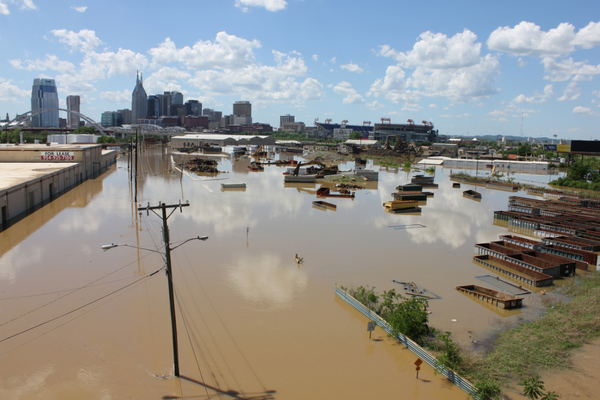
A Closer Look at the May 2010 Flood
In early May 2010, middle Tennessee experienced one of the most destructive natural disasters in its history. Over the course of two days, a record-breaking 13- 20 inches of rain fell across the region—an amount typically seen over several months, not 48 hours. The Cumberland River, along with countless streams, rivers and creeks throughout Davidson County, surged out of their banks. Neighborhoods that had never flooded before found themselves submerged in muddy waters.
The impact was devastating. Homes, businesses, and roadways were overtaken by fast-moving water. Critical facilities, including portions of Metro Water Services infrastructure, were pushed to their absolute limits. Thousands of residents were displaced, and Nashville ultimately suffered more than a billion dollars in damage.
But beyond the physical damage, the flood fundamentally reshaped how Nashville understands stormwater. It showed how essential flooding mitigation is across the region, especially in our highly urbanized areas. This event helped Nashville identify vulnerabilities which resulted in the installation of more river gauges and advancements in computer modeling to improve Nashville’s response in the future.
For Metro Water Services, May 2010 reinforced the importance of our proactive stormwater work: clearing and maintaining drains, designing advanced systems, restoring natural floodplains, and educating residents about how everyday actions affect water quality and flow. The lessons from 2010 continue to guide Metro Water’s stormwater strategy today, inspiring our continued dedication to strengthening Nashville’s resiliency from potential hazards and disasters.
Metro Water Services’ Stormwater Division works year-round to keep Nashville safe and environmentally healthy. Here are just a few of the responsibilities our Stormwater crews manage:
Stormwater work is both proactive and reactive which means the Division plays a crucial role long before and long after major weather events occur.
What You Can Do to Protect Nashville’s Waters
Stormwater management is a community effort. Here are a few easy ways you can make a difference:
Don’t pollute. Keep trash, chemicals, yard waste, and motor oil out of streets and drains. Remember that everything that goes in a storm drain goes straight to local streams.
All of these actions help protect our city from flooding while keeping our waterways cleaner for future generations.
