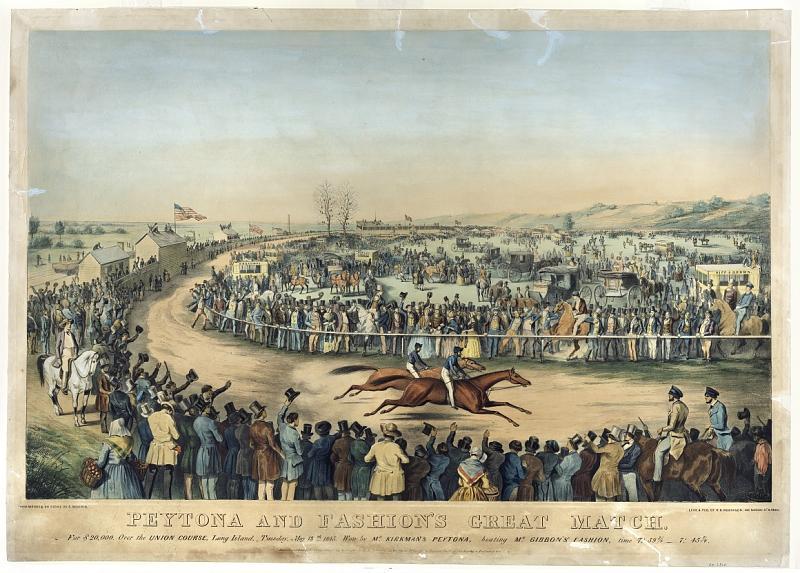
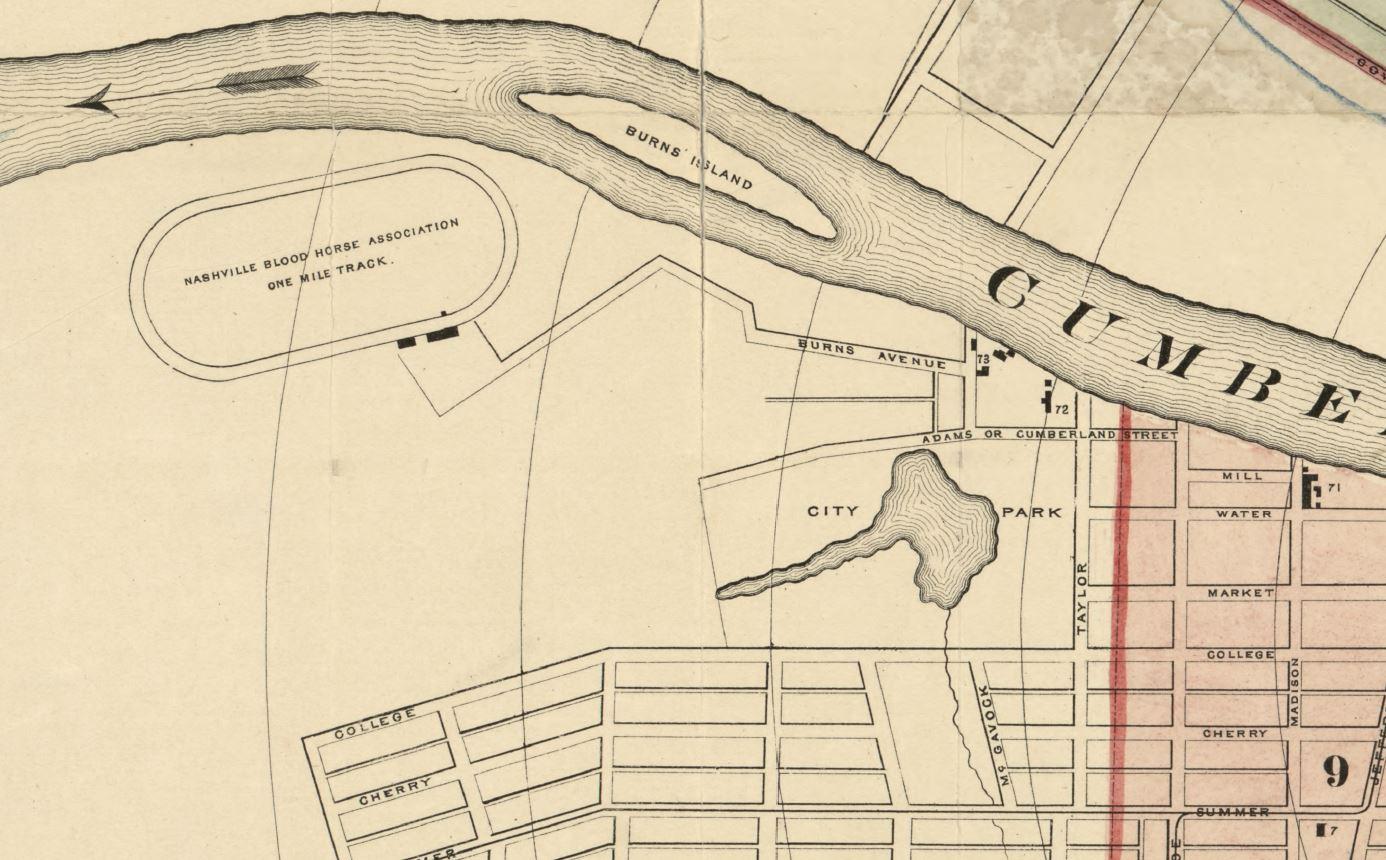
The landscape surrounding the present‑day Metro Water Central Water Reclamation Facility (WRF) holds a surprisingly rich equestrian past. Long before biosolids facilities, sewer infrastructure, and industrial redevelopment, this stretch of land along the Cumberland River was home to one of Nashville’s earliest and most notable horse‑racing venues: the Blood Horse Association racetrack, also known historically as the Nashville Race Course or the Burns Island Racetrack.
Because this property evolved over nearly eight decades of sporting history, it frequently appeared under different names in newspapers, legal documents, and maps. While these names may seem to describe different places, they all refer to the exact same one-mile turf
The Official Name: The Nashville Race Course
This was the formal, widely recognized name of the venue. It was used on official racing programs, national turf calendars, and is the name preserved today on Nashville’s official historical markers.
The Geographic Name: The Burns Island Track
This was the popular local nickname for the track, mostly due to local geography. The track sat directly on the bend of the river adjacent to Lower City Island, which locals universally called "Burns Island."
The Institutional Name: The Nashville Blood Horse Association Track
This name reflects the organization that managed the property. The "Blood Horse Association" was the formal club of elite local breeders and racing enthusiasts who organized the meets, maintained the grounds, and funded the massive purses.
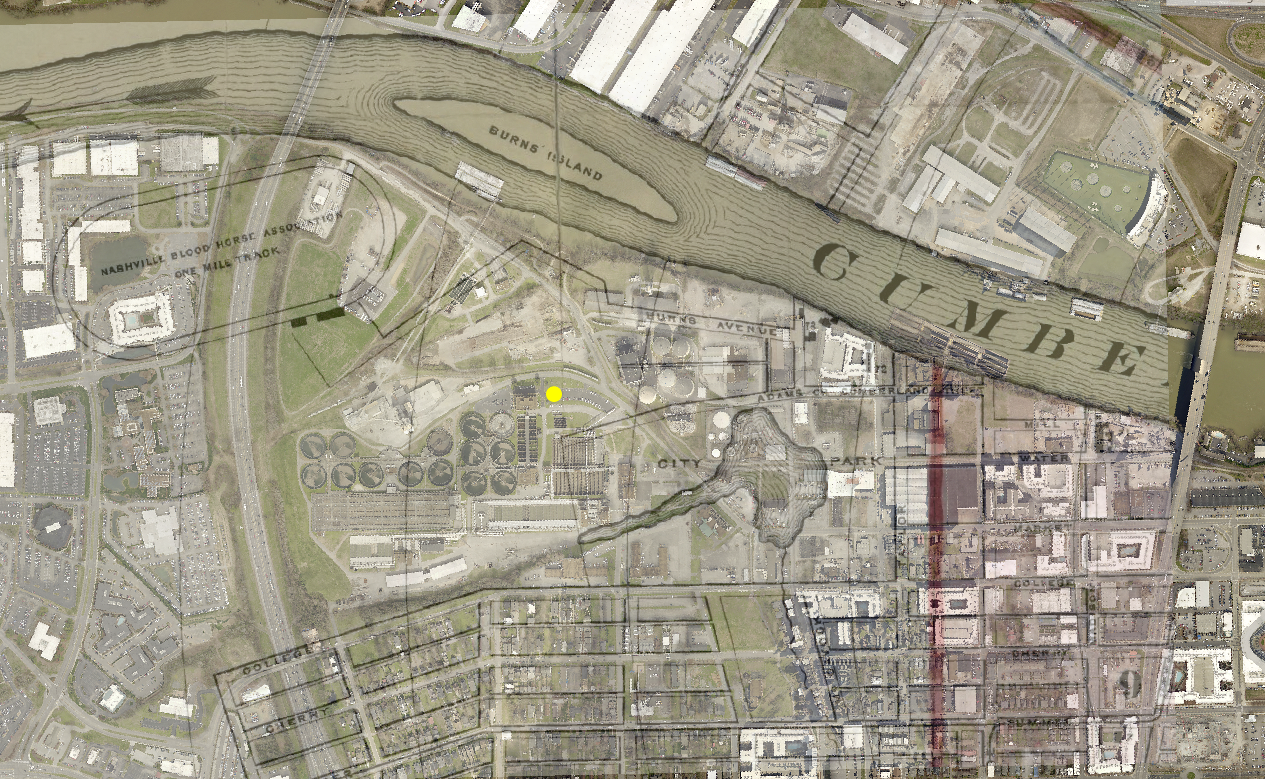
Whether any source mentions the official Nashville Race Course, references the geography of Burns Island, or points to the Blood Horse Association that ran it, they are all mapping the exact same historic footprint now occupied by the Central WRF.
Early Horse Racing in Nashville
Horse racing was a popular sport in Nashville during the early 19th century. According to historical accounts, horse racing tracks existed as early as 1808. Even Andrew Jackson himself was reported to have raced at Clover Bottom!
By the mid‑1800s, another major racing venue (the Burns Island track) operated near Second Avenue North and Van Buren. From 1828 to 1886, this track witnessed several notable events, including the 1843 Peyton Stakes. With a purse, total amount of prize money, of $35,000, the Peyton Stakes was the Peytona, owned by Nashville resident Thomas Kirkman. Despite periodic flooding, the track survived the Civil War until it was eventually replaced in 1887 by West Side park.
Transition to Industrial Use: WG Bush & Biosolids
By the late 19th and early 20th centuries, the area transitioned from recreational to industrial use. Plats from 1897 and 1914 show that the parcel where the Metro biosolids facility now stands was part of the W.G. Bush subdivision. In this historical context, "subdivision" does not refer to a modern residential housing development, but rather to the legal partitioning of a large tract of land for industrial use by W.G. Bush & Co., a prominent Nashville brick manufacturing company that operated extensive brickworks and clay-mining operations along the riverfront. This shift from racetrack to brick manufacturing reflects the industrialization of the riverfront and its surrounding neighborhoods.
Understanding the Landscape Through Overlaying Maps
Attempts to overlay historic ‑century cartography aligns approximately with the central and northern portions of today’s
Races to Reclamation
The site now known for biosolids processing once served as a hub of early Tennessee racing culture and a place where nationally significant races were run. Through maps, archival research, and geographic overlays, a vivid picture emerges: the Central WRF area has undergone more than two centuries of transformation, yet the traces of its equestrian heritage remain embedded in Nashville’s historical landscape.